

2026
Protecting young eyes, minds, and hearts
View Online

Sign up for a six month free
trial of The Stand Magazine!
According to recent Gallup polling, public support for lesbian, gay, bisexual, transgender, and queer (LGBTQ) rights in the United States is now slightly lower than it was at its height in 2022.
Gallup (gallup.com) measured public opinion based on the public’s support for same-sex marriage as well as their views on the morality of same-sex relations.
While roughly 71% of Americans in 2022 said same-sex marriage should be legal, by mid-2024 only 69% agreed that it should be.
Simultaneously, the study showed the number of American adults who viewed same-sex relations as morally acceptable fell from 71% in 2022 to 64% in 2024.
However, these numbers likely do not indicate a major reverse trend, since support for same-sex marriage remains historically high overall, and a clear majority of American adults still view same-sex relations as morally acceptable.
So, then, what do the declining percentages indicate?
The significance
“I think the rejection of the TQ [transgender, queer] wing of the movement is probably responsible for the declining support in the overall LGBTQ movement,” said AFA Executive Vice President Ed Vitagliano.
While no study tracking this topic shows a direct correlation between declining support of LGBTQ and trans issues, close observation of the movement validates Vitagliano’s reasoning, as a growing contingent within the LGB wing of the LGBTQ movement has been expressing its desire to separate.
For example, in 2019 the LGB Alliance was founded in the United Kingdom. The organization’s stated mission is “to advance lesbian, gay, and bisexual rights.” Notably absent is any mention of the transgender (T) and queer (Q) cause.
The organization seems to imply that the broader LGBTQ movement – mired in debate over gender identity and transgender rights – has overshadowed concerns of those who identify as lesbian (L), gay (G), or bisexual (B).
From its inception, the organization grew quickly, with the U.S. and other nations launching their own arms shortly thereafter.
By 2025, the original United Kingdom LGB Alliance launched LGB International to serve as a coalition of like-minded national organizations focused exclusively on lesbian, gay, and bisexual issues.
So, while the general observer may see the LGBTQ umbrella as a united front, closer inspection reveals division brewing within the ranks.
The normalization
Vitagliano, who has closely followed the gay movement for some 30 years, explained that from the early days of the homosexual movement, activists understood the importance of public perception.
“They understood that to gain full acceptance, the straight American public needed to see homosexuality as just another natural variation of humanity,” Vitagliano explained. “They wanted the public to view the idea that ‘some men prefer women, and some men prefer men’ as no different than the fact that some people like a Ford, while others like a Chevy.”
According to Vitagliano, that strategy has been in effect since at least the early ’80s, and it has “worked amazingly well,” he said.
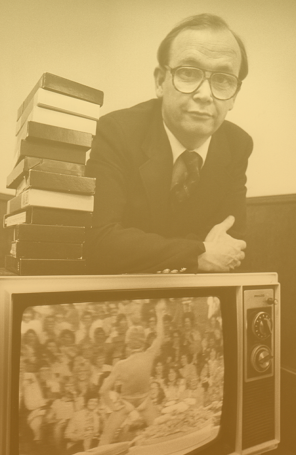
Vitagliano cited two ’90s era sitcoms – Ellen and Will & Grace – as extremely influential in the cultural normalization of homosexuality.
In 1997, Ellen DeGeneres, as both her TV character and in real life, came out as lesbian, marking one of the first times a lead character in a primetime sitcom openly identified
as homosexual.
When Will & Grace debuted in 1998, it introduced gay characters from the beginning, portraying them as relatable, everyday people, making homosexuality more familiar and socially acceptable to mainstream audiences.
“It’s been proven that Will & Grace changed people’s minds about whether or not to support same-sex marriage, because viewers saw people who seemed just as normal as everybody else, sometimes even funny and compassionate,” Vitagliano said.
Another strategy of the exposure and normalization process, according to Vitagliano, is the element of distraction.
“If the homosexual’s day-to-day life seems normal, and people are focused on that normality,” Vitagliano explained, “then they are not thinking about the unnaturalness of the homosexual act.”
The welcome
The normalization strategy proved so successful that the homosexual activists finally allowed transgender and queer people – the ones they had sidelined previously – a place at the table.
Early in the homosexual movement, activists focused primarily on LGB issues, while TQ issues were treated as separate,
or largely ignored, for fear they would undermine public perception and acceptance.
However, with the strategy of normalization being so successful, the LGB activists seemed to open their arms and welcome all.
“I think they included the TQ in the movement simply because in the late ’90s – and especially in the early 2000s, and really up until the past few years – they were on a winning streak, and they didn’t care,” Vitagliano said. “They welcomed everybody because they thought they had won the cultural moment, and they didn’t think there would be any backlash.”
But Vitagliano believes the activists overplayed their hand, and their decision to include the transgender and queer faction backfired.
The hesitation
As one who tracks this controversy closely, Vitagliano said people are growing tired of the issue being forced on them, and he believes people find the entire movement bizarre – men dressing as women, men in women’s sports and spaces, tampon dispensers in men’s bathrooms, transitioning children, etc.
The Economist/YouGov’s 2025 annual poll confirms Vitagliano’s suspicion. The poll found that 41% of those surveyed agreed with the statement “our society has gone too far in accepting people who are transgender,” while a large majority, 64%, opposed allowing transgender students to play on sports teams outside of their biological sex.
“I think that reaction has a spillover effect where people are becoming less accepting of the lesbian, gay, and bisexual community as a whole because they’re just truly disgusted with the trans part of this,” he said.
“The LGB folks are realizing the fight is still on,” Vitagliano continued, “so now they are returning to their original hesitation to include the TQ part of the movement.”
Despite the future of the internal divisions in the LGBTQ movement, public support remains largely intact.
“Overwhelmingly, the American people still uphold same-sex marriage and special rights for homosexuals,” Vitagliano said. “This battle is far from over.”

Sign up for a free six-month trial of
The Stand Magazine!
Sign up for free to receive notable blogs delivered to your email weekly.

OUR FAMILY OF MINISTRIES