

2026
Good, Evil, Both, or Neither?
View Online

Sign up for a six month free
trial of The Stand Magazine!
Like many first-time parents of our generation, my wife and I used the TV to manage the chaos of a household that suddenly had children. As we were very aware of the negative effects of screen time for kids and wanted to avoid the dreaded “iPad kid” phenomenon, we were intentional about the programs allowed. Low-stimulation, calm, and uplifting was the standard, and one gem rose above all the rest: Mister Rogers’ Neighborhood.
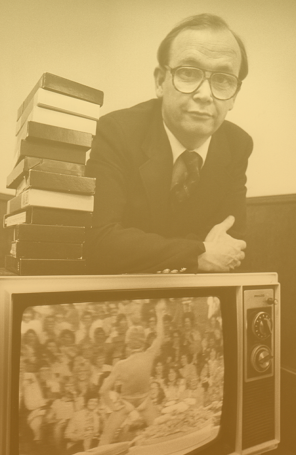
Ordained in 1963 by the Presbytery of Pittsburgh at Third Presbyterian Church specifically to minister to children and families through mass media, Fred Rogers didn’t fit into anyone’s preconceived mold of what a successful man in the television industry should be. Holding firmly to his principles, taking a stand for what he believed, yet maintaining a disposition of grace and humility, he stood out in a world confused about what a man should be.
After reading about Fred Rogers and learning about his life and values, my wife and I concluded that it was God's work in his life that shaped him into a man who quietly defied the world’s paradigms. He was profoundly impactful in the lives of countless people, and continues to be in my own household, as his message has been used by God to influence how I parent.
Children are important, and they matter
We’ve all heard the adage: “Children should be seen and not heard.” In modern times, if a couple decides to have children at all, society teaches them that children are accessories, a checkmark on the laundry list of life, and a nuisance to be complained about. If they are people, they are just barely, and certainly don’t have to be treated as such.
Fred Rogers actively taught that children aren’t simply to be tolerated. They matter. In each episode of Mister Rogers’ Neighborhood, he would often directly address his “television neighbor” with the words: “You make every day a special day. You know how: By just your being you. There’s no one in this whole world like you.”
This simple statement can be overlooked easily unless we understand what Fred was truly saying.
In a song he wrote for the show called “Creation Duet,” the first verse asks where everything came from, and who made it all? The second verse answers:
God made the rainbow, the bird, and the summer sun
God made the mountains, the stars, each and every one
God made the sea, and He made the land
God made the mighty, and God made the very small
God made the world and made the people
He made it all
This song appeared in multiple episodes of Mister Rogers' Neighborhood, and although sadly PBS forced the lyrics to be changed from “God” to “Love,” we can still see Fred’s message. “You,” children or watching parents, are special and matter… not because of something you did, but because of Who made you.
“You’re special,” I now say to my kids nearly daily. They are special because God made them. God gave them into my care. They are important, intentional designs of the Divine Mind. When I go home, when I discipline, when I instruct, I am engaging with something deeply worshipful and holy. This is sacred, and God forgive me when I lose sight of this.
Feelings are opportunities
Fred Rogers faced criticism, notably in the 90s and 2000s, for speaking on the importance of feelings and emotions. After all, the assumption pressed, if someone thinks their feelings matter, the universe will revolve around them. Many years later, Ben Shapiro made the statement, “Facts don’t care about your feelings.” Two plus two equals four, regardless of how you feel about it.
Yes, and thank goodness. Feelings aren’t the same as truth, and emotions should not be allowed to rule. But what the critics in past decades missed was that this was Fred’s message all along: there is a way to deal with feelings and emotions without hurting others or yourself.
One of Fred’s most iconic songs, "What Do You Do with the Mad That You Feel?" deals with this matter directly.
What do you do with the mad that you feel
When you feel so mad you could bite?
When the whole wide world seems oh, so wrong
And nothing you do seems very right?...
I can stop when I want to,
Can stop when I wish,
I can stop, stop, stop any time.
And what a good feeling to feel like this
And know that the feeling is really mine.
Know that there’s something deep inside
That helps us become what we can.
For a girl can be someday a woman
And a boy can be someday a man.
This has been a lesson for my children and me. We can take ownership of what we do and how we treat others. We can always say “no” when we feel the urge to do something hurtful, and we don’t have to be a victim of how we feel. We can make space for the fruits of the Spirit to grow fully, unencumbered by undealt-with emotions.
To say that feelings don’t matter, or that they should be stuffed down, stifled, or ignored, is to miss wonderful parenting opportunities. Feelings are where discipleship happens. When my children communicate how they feel, I can meet them where they are and teach them what needs to be taught.
This can’t happen if my kids don’t feel safe sharing their emotions with me. I wouldn’t know how to teach bravery if they weren’t allowed to express fear. I couldn’t teach self-control if they can’t confide in me that they want to hit their sibling. And I can’t be an example of self-control, honesty, and humility if I’m unable to share how I feel or model how to handle my feelings well.
Being able to communicate our emotions and feelings teaches us to tell the truth, and naming how we feel helps us resist being ruled by our feelings.
It’s alright to wonder
Anyone who has spent any time around children knows that they are fountains of questions. And they don’t really care if their questions are awkward or embarrassing… they’ve only been in this universe for a handful of years, and they’re trying to make sense of it all.
Today, artificial intelligence has replaced “Googling” as the ubiquitous go-to for answering questions. It’s convenient, personalized, and it does not judge. This frightens me as a parent. I don’t want my children to take life’s important questions to a chatbot that can’t have their best interests at heart.
Often in his speeches, Fred Rogers would say, “anything that’s human is mentionable, and anything that’s mentionable can be more manageable.” In other words, when we can talk about something in the human experience, we can help one another through it in meaningful ways. So, in our household, no subject of conversation or question is discouraged.
Of course, this opens the floodgates. Questions about death, birth, romance, angels, aliens, cancer, scary movies, the human body, and all its functions… all kinds of questions that can be and often are uncomfortable and need to be handled with care. But it is important that my children know I am here to answer their questions. I will tell them the truth, and nothing they ask or are concerned about could make them unsafe with me.
I’m still growing
In 1985, Fred Rogers appeared on the Oprah Winfrey show to discuss children and parenting. Oprah asked him, “What do you think are the biggest mistakes parents make in raising their children?”
“Not to remember their own childhood,” he answered. “I think that the best thing that we can do is to think about what it was like for us and know what our children are going through ... children can help re-evoke what it was like, and that's why when you're a parent, you have a new chance to grow.”
Remembering how big, scary, and fun the world was when I was small helps me understand what my kids need from me. I need to give them the space to wonder about things, to take their time, and grow at the pace they were meant to. I need to give them the feeling of safety necessary to process fear and uncertainty. I need to be trustworthy, deserving of their respect, and quick to show them they are loved, both in words and in actions.
I’ve often thought about myself years ago when I was a child, and I’ve realized something. That child is still here. He didn’t go away. He just has an adult built on top of him now. All the things he was afraid of, or the things he wondered about, or the things that hurt him, or the ways people loved him and taught him, all of that is still there. In many ways, as I’m parenting my kids, I’m also parenting him and growing in ways I thought I didn’t need.
Understanding and naming the things from my childhood that still linger and impact me today gives me fuel for prayer. I’m not wrestling with vague feelings and faceless struggles. I can point to them, tell the truth about them, and bring them before my heavenly Father. This is my new chance to grow, and to grow alongside my own children in prayer and pursuing God.

Sign up for a free six-month trial of
The Stand Magazine!
Sign up for free to receive notable blogs delivered to your email weekly.



OUR FAMILY OF MINISTRIES