


2026
Good, Evil, Both, or Neither?
View Online

Sign up for a six month free
trial of The Stand Magazine!
“We will never see the cross as the center of our own history until we see it as the center of all history,” writes Calvin Miller (1937-2012) in Once Upon a Cross. Think about the depth of his words. The cross is the center point not only of the Christian faith, but also of all civilized cultures of all time.
Miller bemoans that we have transformed the cross into a “vacuous symbol” displayed without thought on jewelry, bumper stickers, refrigerator magnets, church walls, and steeples. He grieves over how we have gradually grown to take the cross so lightly,
“We never march purposefully into hell,” he writes. “We simply fall asleep on the slopes and slide in.”
Reviewing some old notes recently, I was moved again to consider the place of the cross in my own life. In the pressure of full disclosure, yes, there’s an entire collection of refrigerator cross magnets – arranged in the shape of one large guess what. An art gallery of church steeples fills the largest wall of my living room. Crosses sit scattered about on shelves. I sometimes wear it on a lapel pin. And I once used a bumper sticker on my car.
In today’s Christian culture, we seem to have reached a point where faith is focused on the individual. We seek Christian growth for our personal benefit and fulfillment. The cross is relegated to the periphery, a historical reality we acknowledge and appreciate, but not the conscious centerpiece of our faith.
He focuses on the fact that at the cross, we can find the answers to life’s toughest questions about grief, salvation, life, betrayal, relationships, death, and sacrifice.
Miller identifies contemporary culture’s bent to “sincerity” as the most popular alternative to the way of the cross. Pop philosophers, misguided theologians, and shallow commentators lead us astray when they insist that one's sincerity without repentance is a valid path to salvation.
And he’s talking about not only the spiritual miracle of salvation – not only a changed life, but also a changed lifestyle. With powerful prose pictures and convicting clarity, Miller leads the reader gently to the foot of the cross. To a place of confession and repentance.
“It is sad that we have weaned ourselves from our need of His sacrifice,” Miller says. “We have wrapped our passion in apathy. We sleep untroubled before the cross. No need to confess our sin because we have abandoned the idea of sin. We have ‘self-esteemed’ our way into the court of God.”
“Jesus is the only way to God,” Miller warns. “May [Buddha], Confucius and Mohammed take note: The way to God must pass through Christ and His cross.”
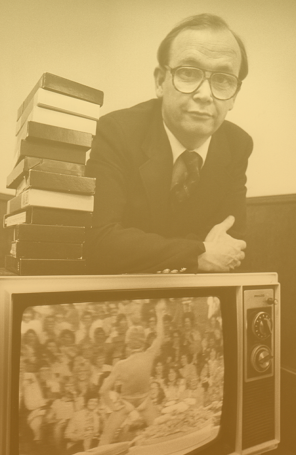
Miller’s decades of preaching and teaching culminated as a professor at Samford University’s Beeson Divinity School, and his extraordinary command of words has inspired a generation of other Christian writers.
FYI, this man’s insights in Once Upon a Cross are all the more cogent because this small volume was first published in the 1970s. We can’t say he didn’t try to warn us.
When one truly comes to the cross, he concludes, it will result in a changed heart, a changed mind, and a changed behavior.
As uncomfortable as it may be, I confess it was again time for me to review the place of the cross in my head, my heart, and my behavior.
Sign up for free to receive notable blogs delivered to your email weekly.


Sign up for a free six-month trial of
The Stand Magazine!

OUR FAMILY OF MINISTRIES