


2026
Thankfulness that never ceases
View Online

Sign up for a six month free
trial of The Stand Magazine!
The Bible speaks at length about the importance of impressing God’s truth on the next generation. Deuteronomy 6:6-7 says, “These words, which I am commanding you today, shall be on your heart. You shall teach them diligently to your sons and shall talk of them when you sit in your house and when you walk by the way and when you lie down and when you rise up.”
While many Christian parents faithfully uphold this command in their households, the outcomes are sometimes mixed.
For instance, studies conducted over recent years have revealed a trend of young, formerly professing Christians leaving the faith or deconstructing. A May 2025 Pew Research Center survey reveals the following as some of the “extremely or very important” reasons the respondents had left the Protestant faith:
• “Stopped believing in the religion’s teachings”
• “Just gradually drifted away”
• “Religion just wasn’t important in their life”
So then, the question for the church and Christian parents is this: What, if anything, can be done to stem the tide of young people leaving a faith in Christ that they once claimed?
Battling for minds and hearts
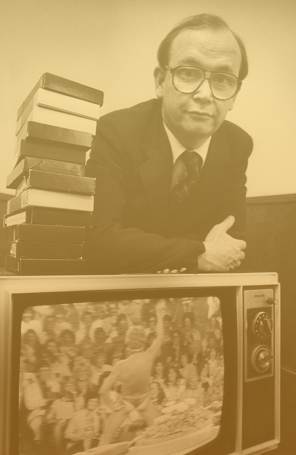
Jeff Keaton, chairman and president of RenewaNation (renewanation.org) and author of Saving Our Children in a World Gone Crazy, has spent decades learning how children develop a biblical worldview.
“I was a pastor for almost 20 years,” he told The Stand, “My first pastorate was Miami Fort Lauderdale Inner City Church, and all the kids there were in public education. The school had them for 40 hours a week; I had them for an hour or two – and I was losing that battle. So, I began way back in the 90s to develop this passion for giving children a biblical worldview, helping them to understand God’s thoughts about every area of life.”
Keaton said that when he left the pastorate in 2011, God put on his heart the desire to write a book meant to empower Christian parents to be fully invested in urgently fostering a biblical worldview in their children.
“It took me until 2025 to release the book,” he explained. “I’m convinced that if we do not get parents fully engaged in the worldview development of their children, we will not be successful at giving children a biblical worldview,” Keaton said. “If we don’t get parents off square zero and into the game, we’re not going to be successful.
“So, I wrote the book for busy parents raising children,” he added. “[My aim is] to fill them with hope that if they do this, they can raise amazing young people who will make a huge difference for Christ in the world.”
Biblical worldview is a term that has grown in use among conservative Christian circles, but what does it actually mean? Keaton said it is an outlook that encompasses more than just spirituality, church life, and theology. It is an all-encompassing view of reality.
“I focus on viewing every aspect of life through God’s perspective: business, medicine, law, government, family, ministry, and religion,” he explained. “I believe that instilling God’s thoughts in a child’s heart through His Word can lead to prosperity, productivity, and harmony in the world. By fostering a biblical worldview, we help establish foundational beliefs that guide their lives in accordance with God’s good and beautiful design.”
Living by faith
Establishing a foundation of biblical belief and values may be simple when children are young. But as they grow into teens, they face shifting ideas that challenge previously held convictions, causing them to walk away from what authority figures present as absolute truth.
Keaton acknowledges the difficulties parents face when dealing with hostile and rebellious older children. He calls it “spiritual warfare.” He does not pretend that there is a technique to quickly reverse the situation. In fact, he warns parents against attempting to pressure or manipulate an older child into believing.
“The parents must fast and pray for that child habitually,” he said. “You can’t take a fully rebellious 17-year-old and make [him] believe something. The only One who can do that is the Spirit of God. You fast, you pray, and you rest [him] in the hands of God. And then you love [the teen] unconditionally. You do not say, ‘If you serve God, then you have my love.’ Too often, we show conditional love to a wayward child.”
But not every situation involves an outright rebellious child. Some older children may simply be apathetic toward Christianity. Others may have even been wounded by their parents’ failures.
“Maybe they went through a bitter divorce,” Keaton offered as an example. “Maybe it’s a dad who left his wife, and now he’s repentant and broken. He wants his child to serve the Lord, but he set a bad example.”
In cases like these, Keaton believes one of the most powerful things a parent can do is something surprisingly simple: apologize. Humility and the acknowledgment of shortcomings without excuse show the authenticity of a parent’s love for their children and for God.
He recalled a story from his own childhood, when he and his siblings provoked their father by being disobedient. After their father exploded in anger, he calmed down and apologized to his children.
“He brought all of us kids onto the couch with our mother,” Keaton remembered. “He sat down, and he wept, and he begged our forgiveness. … I remember that day. That was the worst day of my dad’s life as a father. Yet, because he humbled himself, I never held it against him. And I knew he was a legitimate man of God.”
Giving the burden to God
Parents cannot go backward and recreate childhood, Keaton reminded. But parents can decide what faithfulness looks like now.
For some, it means beginning family Bible conversations while teenagers are still at home. For others, it means apologizing for ways they failed to demonstrate the Christianity they professed. For parents of wayward adult children, it may mean replacing arguments with persistent prayer and unconditional love.
Keaton said the basis for his confidence is not that parents can change their children. Instead, his hope rests in his belief that God can reach children when their parents cannot.
“Every prayer they ever pray for a wayward child is deposited eternally in the heart of a God who never dies,” encouraged Keaton. “Even if [parents] get elderly and their child has not been saved, all the prayers they’ve ever prayed are still going to be answered by God in Heaven long after [the parents] are gone.
“So, pray until your dying breath and believe that Jesus can move … and He will.”
Sign up for free to receive notable blogs delivered to your email weekly.

Sign up for a free six-month trial of
The Stand Magazine!

OUR FAMILY OF MINISTRIES