


2026
Thankfulness that never ceases
View Online

Sign up for a six month free
trial of The Stand Magazine!
“It is becoming evident today that capitalism needs defending.” That statement is from the 2023 book, The Economics of Freedom: In Defense of Capitalism, written by David Rankin and his daughter, Beth Anne Rankin Baker.
“Those who would lead us toward other economic systems are both vocal and dedicated,” write Rankin and Baker. “We must speak up and promote what we know to be the most efficient economic system ever discovered.”
But what makes capitalism superior to other economic systems? Why is it worth defending, and if it is truly under attack, can it be saved?
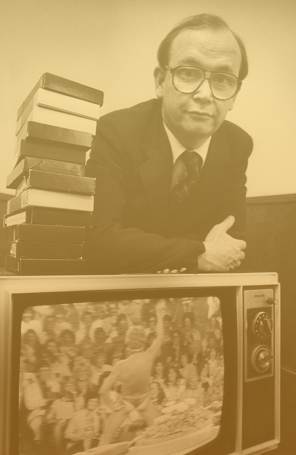
Rankin, president emeritus at Southern Arkansas University, spoke with The Stand to answer these and other questions.
Rankin served as economic adviser to four Arkansas governors and was chairman of the Governor’s Council of Economic Advisors for nearly 30 years.
But Rankin’s defense of capitalism did not begin with his career as an economist. It began with his fascination with freedom.
Freedom and capitalism
Rankin became a student of history at a young age, showing a particular interest in the early history of the United States of America – how it was formed and what the Founding Fathers endured to achieve the country they desired. He spent four years of his childhood in Hot Springs, Arkansas, living across the street from the county library, where he would frequently check out books on the early years of America.
“I really became infatuated with the concept of freedom as the Founding Fathers understood it,” Rankin said. He now views economic freedom as an extension of that broader freedom.
Rankin contends that the Founding Fathers could not have envisioned a massive government, much less socialism or communism.
“They just wouldn’t have had that in their minds,” he said. “Their whole emphasis was
on freedom.”
Rankin provided a brief example by pointing to one of America’s founding documents as evidence that this emphasis on freedom extended to economic activity. He explained that the U.S. Constitution prohibits states from imposing tariffs on goods from other states, effectively creating a 50-state free-trade zone. He also pointed to Scottish economist Adam Smith’s influence on the founders. Smith’s book titled The Wealth of Nations, described by Rankin as “a blueprint for capitalism,” was published in 1776, the same year the Declaration of Independence was signed.
“The whole concept of the United States was formed around freedom, free enterprise, and capitalism,” Rankin explained.
The core principles of capitalism
But what does Rankin mean when he talks about capitalism? What exactly is it?
Rankin identifies seven basic principles of capitalism:
1. PRIVATE PROPERTY
2. FREEDOM OF ENTERPRISE
3. COMPETITION
4. RELIANCE ON THE PRICE SYSTEM (LAW OF SUPPLY AND DEMAND)
5. OPPORTUNITY FOR PROFIT
6. LIMITED ECONOMIC ROLE FOR GOVERNMENT
7. ENTREPRENEURSHIP
Rankin explained how these principles – each given its own explanation in his book – promote individual freedom and incentives to create, invest, work, and exchange, with the assurance that a limited government will establish and enforce rules without attempting to direct economic activity itself.
The superiority of capitalism
However, no system is perfect, and Rankin believes that capitalism is no exception to the rule.
“Capitalism does have flaws,” he said. “But do you know why it has flaws? Because people have flaws.”
Still, Rankin deems capitalism far superior to government-run systems. He argues that the free market naturally weeds out businesses that fail to operate efficiently, while flawed government programs can continue indefinitely.
“In the private sector, if you don’t run an efficient organization, you’re going to be out of business,” he said. “But in government, those programs just keep going and going.”
That does not mean Rankin believes government has no role to play. Humans – and, by extension, capitalism – are flawed, so behavior must be governed.
“You have to have rules and laws,” he stated.
But Rankin explained that government should act more like a referee than a player. Using a football analogy, he said that the officials explain the rules, the rewards for following the rules, and the consequences for breaking them. But the referees themselves do not play. They do not call the plays or tell the players how to do their jobs.
“That’s the best model for government,” he said. “Government should set the rules and enforce them but not play the game.”
A biblical view of capitalism
Rankin’s defense of capitalism raises a larger question: Are the principles of economic freedom consistent with Scripture and a biblical worldview? He believes they are.
As one example, he pointed to the Old Testament, noting, “There’s never any discussion of King David or Solomon trying to regulate business.”
“They did things to provide for the national security of the country,” he continued, “but they didn’t regulate private business and industry.”
Unsurprisingly, Rankin often hears the argument that Christians should lean more toward socialism because Christians are to be a generous and sharing people.
“Yes, we are,” Rankin agreed, “but it is voluntary. It’s the individual that makes the determination. It’s not for the government to make that call.”
In addition, Rankin said that capitalism is simply the natural order. To illustrate, he said to imagine 30 people stranded on an island: “Somebody who is good at fishing will go out and catch some fish and swap some of his fish for help from someone who can help him build a house.
“Another who is good at gardening grows some produce,” he added, “and then trades that for fish, and on and on.”
Before long, an economy would emerge simply based on individuals, under no compulsion from government, meeting one another’s needs by voluntarily exchanging goods and services.
“Socialism cannot exist without a coercive government,” Rankin said. “But capitalism can because it just develops naturally.”
The stakes of capitalism
Rankin contends that the benefits of capitalism and economic freedom affect more than just money. In fact, he suggests economic freedom is directly connected to other fundamental freedoms.
“If you don’t have economic freedom, you’re not going to have the other freedoms,” he asserted. “You’re not going to have the freedom of religion, freedom of speech, and all the other rights protected by the First Amendment.”
Rankin’s point is not that capitalism creates religious or political freedom, but that the principles of economic freedom stand in contrast to other systems that incrementally encroach on all freedom, until there is none left.
With so much at stake, the pressing question becomes this: Can capitalism be saved?
Rankin thinks it can, but not without a renewed commitment to teaching the next generation what economic and personal freedom mean. He is encouraged to see some Americans pushing back on the current theme that capitalism, profits, and free enterprise are bad.
“We have to be sure that reaction is sustained,” he concluded. “I think there is hope, but it’s going to take a lot of work.”
Sign up for free to receive notable blogs delivered to your email weekly.

Sign up for a free six-month trial of
The Stand Magazine!

OUR FAMILY OF MINISTRIES